Caring for our Coastal Emus

Share on Facebook Share on Twitter Share on Linkedin Email this link

Calling all citizen scientists and wildlife enthusiasts! Clarence Valley Council is keen to learn about where you've seen coastal emus.

Local landholders, together with the Clarence Valley Council, the Office of Environment and Heritage and the Coastal Emu Alliance are working to protect coastal emus and their habitat. To do this, we are collecting data on where our emus are located via an online register. The emu register will let you pinpoint a sighting location on a map. You'll also be able to add more information about the sighting.

Furthermore, if you haven't seen an emu but still want to share your story - go for it! Head to the stories tab to begin telling us about your experiences.

Calling all citizen scientists and wildlife enthusiasts! Clarence Valley Council is keen to learn about where you've seen coastal emus.

Local landholders, together with the Clarence Valley Council, the Office of Environment and Heritage and the Coastal Emu Alliance are working to protect coastal emus and their habitat. To do this, we are collecting data on where our emus are located via an online register. The emu register will let you pinpoint a sighting location on a map. You'll also be able to add more information about the sighting.

Furthermore, if you haven't seen an emu but still want to share your story - go for it! Head to the stories tab to begin telling us about your experiences.

Category coastal emu   Show all

  • Protection of endangered emus: a community responsibility, urges Council

    Share on Facebook Share on Twitter Share on Linkedin Email this link
    03 Oct 2019
    supporting image

    Clarence Valley Council is urging locals to consider installing emu-friendly fencing to help protect the last 50 coastal emus remaining in this endangered population.

    Clarence Valley Council’s natural resource management project officer, Dr Caragh Heenan, said “members of the public are encouraged to consider the needs of native wildlife when installing fencing and choose wildlife-friendly options. Many fences in critical coastal emu habitat around Shark Creek and Taloumbi were destroyed after the recent fires, so rethinking the fencing needs of the landholder could play a critical role in protecting the coastal emu.”

    “Barriers to movement are one of the main threats to the coastal emu. Certain kinds of fencing or thick weed growth can limit the ability of the coastal emu to access food trees and habitat.”

    “Vehicle strike also increases in areas where fences are built close to the roadside, as emus cannot cross the road easily,” she said.

    “It’s natural to want to mark out a property boundary, but if a fence isn’t needed to keep stock contained, then having no fence at all will benefit this endangered coastal emu population,” explained Dr Heenan.

    “Emus can struggle to get through a four-strand, plain wire fence, but even changing to three strands can make a difference. Barbed wire, mesh, and electric fencing all have an impact on emus and so are discouraged.”

    “Allowing coastal emus to move freely in our landscape helps the birds and the native vegetation, as emus disperse seed and promote germination of many of the native shrubs, herbs and grasses in our region,” Dr Heenan said.

    With the odds against them, coastal emus need your help. Following the recent bushfires, we are now more interested than ever in receiving sightings of emus, particularly chicks. Sightings can be reported on the Coastal Emus in the Clarence register at www.clarenceconversations.com.au/coastalemus.


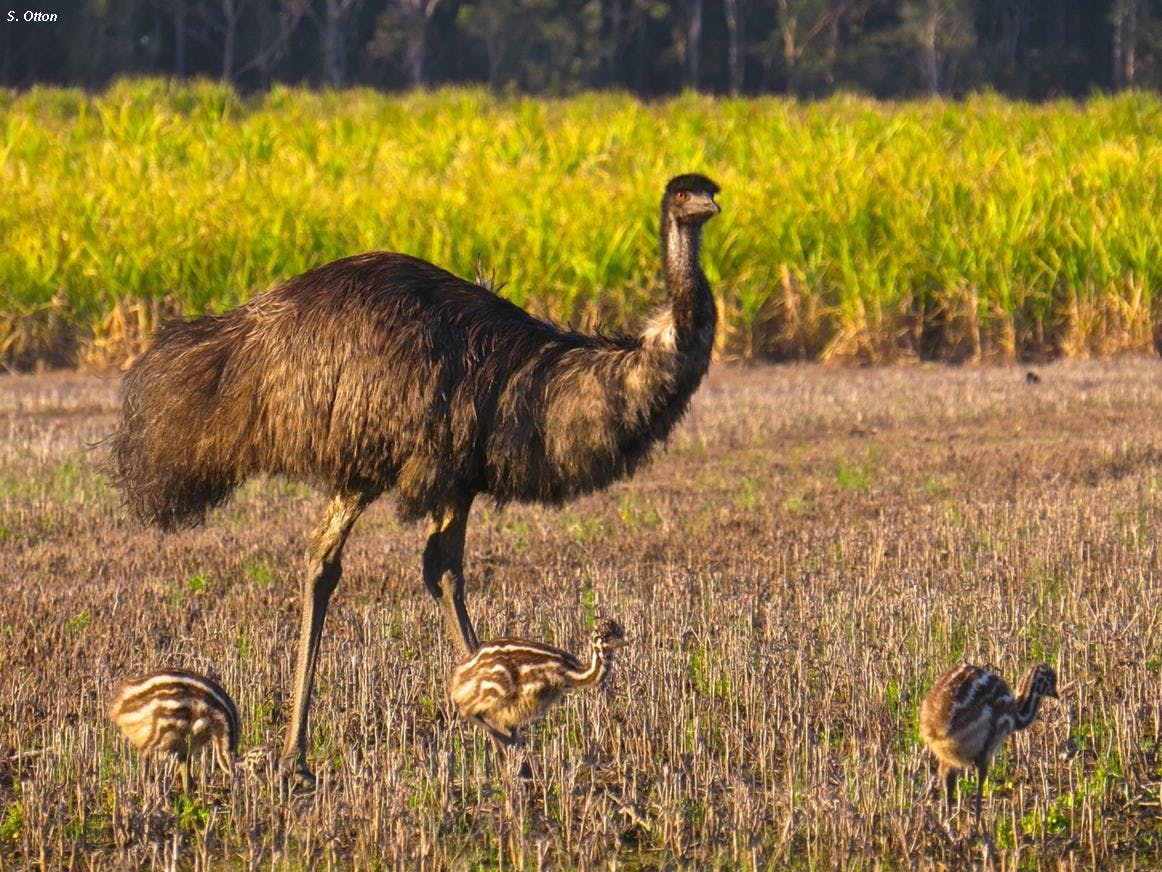
    Coastal emus are at risk of extinction, with fences acting as a barrier to movement and proving a threat to their survival. Image credit: S. Otton.

  • Coastal emu networks in a nut/egg-shell

    Share on Facebook Share on Twitter Share on Linkedin Email this link
    18 Mar 2019

    In December 2018, Clarence Valley Council hosted a coastal emu community information session, working alongside Office of Environment and Heritage to update Brooms Head and Gulmarrad residents on the importance of protecting this iconic species.

    One of the items that was raised as feedback was the need for more information on the groups that work on the coastal emu population and how they fit together. We've heard your cries and we are here to help!

    You can now download a list of the groups relating to coastal emu work in the Clarence Valley and Richmond Councils, as well as their contact details.

    Coastal emu networks fact sheet - Download

    Still unsure of who to contact? Get in touch with the team at Clarence Valley Council (Meet the Team) and we can help to direct your query to the right place!