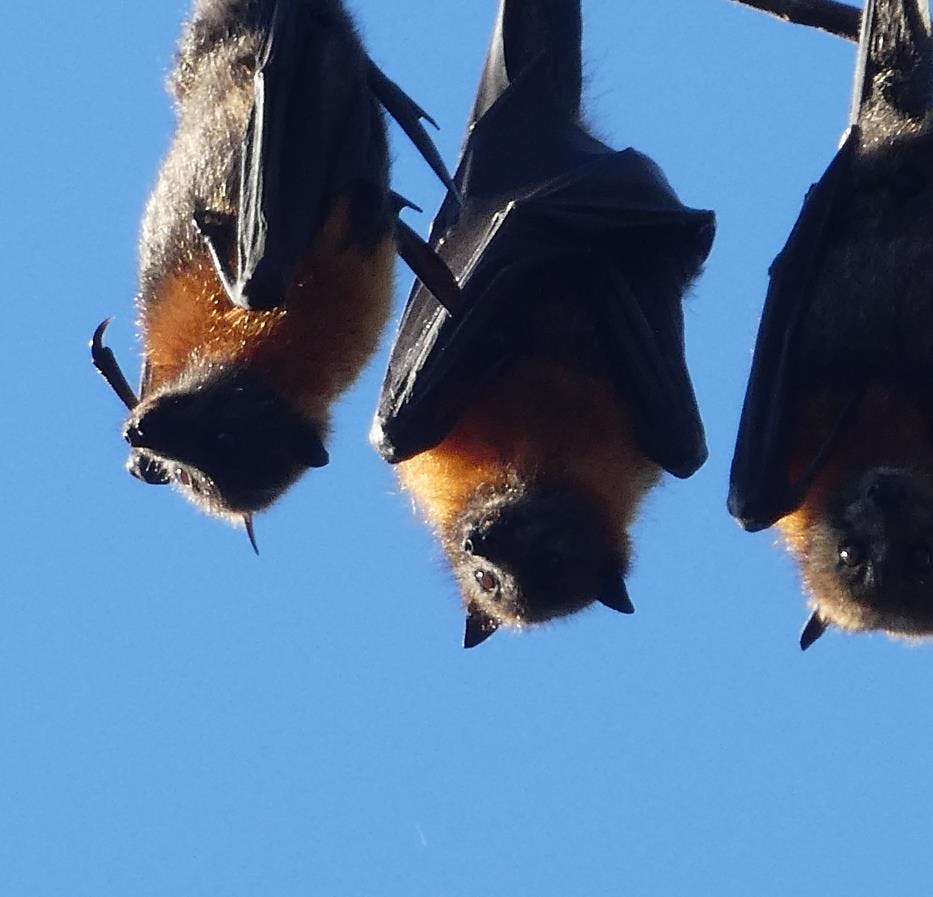
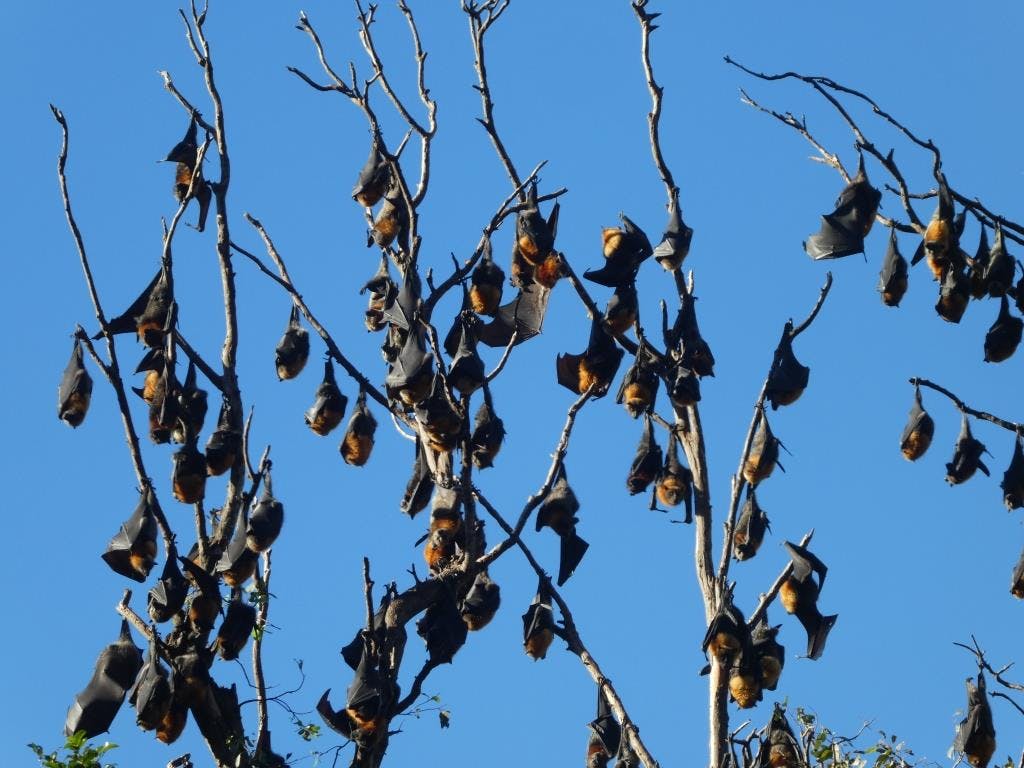
Flying-foxes in the Clarence Valley
Clarence Valley Council is working to protect flying-foxes and their habitat and prevent negative interactions with flying-foxes in core habitats. To do this, we are developing a flying-fox management plan and communications strategy for the Clarence Valley, as well as working on habitat regeneration and revegetation in flying-fox habitats to increase buffers.
The Long Way Home's "Fly By Night stories from the Clarence Valley 2024" have been recorded, produced and published as a podcast series by 2GF. For more information or to listen to the podcasts, head to: https://2gf.au/articles/the-long-way-home-fly-by-night/
Clarence Valley Council is working to protect flying-foxes and their habitat and prevent negative interactions with flying-foxes in core habitats. To do this, we are developing a flying-fox management plan and communications strategy for the Clarence Valley, as well as working on habitat regeneration and revegetation in flying-fox habitats to increase buffers.
The Long Way Home's "Fly By Night stories from the Clarence Valley 2024" have been recorded, produced and published as a podcast series by 2GF. For more information or to listen to the podcasts, head to: https://2gf.au/articles/the-long-way-home-fly-by-night/
Category wildlife Show all
-
Flying-foxes fighting for food after bushfires
Share Flying-foxes fighting for food after bushfires on Facebook Share Flying-foxes fighting for food after bushfires on Twitter Share Flying-foxes fighting for food after bushfires on Linkedin Email Flying-foxes fighting for food after bushfires linkResidents in the Clarence Valley and greater north coast New South Wales may notice some unusual behaviour occurring among the flying-fox (fruit bat) population at the moment. The flying-foxes have been observed flying around during the day, roosting in tree species that they would normally not inhabit, particularly in urban backyard fruit trees, and many are falling out of trees or dying in situ. Some individuals are refusing to return to their colony and are rather staying nearby a food resource to protect it. The unusual behaviour is linked to malnourished bats undergoing starvation.
Clarence Valley Council is working with the NSW Government and Local Government New South Wales through a funded project ‘Maclean Flying-fox Management’ to deliver improved outcomes for flying-foxes in the Clarence Valley and help to manage conflict with the bat colonies. Natural Resource Management Project Officer, Dr Caragh Heenan says that food shortages for flying-foxes can often occur at the end of the winter period on the east coast, but the drought conditions and extensive wildfire this year have exacerbated the situation,”
“Floral resources are in short supply and this is leading to a reduction in the weight of individuals, and in some cases they cannot cope – they are starving to death,” Dr Heenan said.
“It is a difficult time for everyone following the fires and with the drought conditions occurring, not just for the flying-foxes. As more and more natural habitats are cleared and the pressure on flying-foxes to find reliable food resources increase, it is likely that starvation events such as this will become more common.”
Flying-foxes can carry Australian Bat Lyssavirus (ABL), so any exposure via a bite or scratch could lead to infection. In the last month, 10 people have been bitten or scratched after handling bats across the Mid North Coast and Northern NSW Local Health Districts.
Assistant Director North Coast Public Health Unit, Greg Bell, said that residents are advised against handling or touching any injured or dead flying-foxes, even if they appear to be dead, unless trained or vaccinated.
“If you are bitten or scratched by a flying fox or bat, immediately wash the wound gently but thoroughly with soap and water, apply an antiseptic and consult a doctor as soon as possible to assess the need for further treatment,” Mr Bell said.
Dr Heenan said that any residents that find flying-foxes sick, injured, in poor heath, or deceased, should contact WIRES (NSW Wildlife Information, Rescue and Education Service Inc.) immediately via their rescue hotline on 1300 094 737. Vickii Lett, a local WIRES carer, said that the volunteer organisation is keeping track of the number of deaths so that the data can assist researchers in understanding the impact of the recent deaths on the flying-fox population.
“WIRES are seeking volunteers to assist with wildlife rescue and care. Volunteers are particularly stretched during the post-bushfire recovery period, and so the public are encouraged to get in touch with us if they think they can help,” Ms Lett said.
Council has launched a Flying-foxes in the Clarence Valley engagement webpage as part of the funded project, seeking input from members of the public via a camp monitor and there’s a Q&A page where you can send us your general queries about flying-foxes. The engagement page is aimed at communicating with the public regarding flying-fox camp management, as well as informing residents about the development of management guidelines for local camps. You can visit the page at https://www.clarenceconversations.com.au/flyingfoxes to explore the camp monitor, learn more about flying-foxes, or keep updated on the project.
Photos
Meet the Team
-
RL
Phone (02) 6641 7241 Email reece.luxton@clarence.nsw.gov.au
FAQ
- Why are flying-foxes integral parts of the ecosystem?
- Where can I find flying-foxes in the Clarence Valley?
- How can I tell the three local species of flying-fox apart?
- Why is the grey-headed flying-fox listed as a threatened species?
- What is a flying-fox management policy and plan?
- Why can't flying-fox camps be relocated?
- What can I do if flying-foxes are impacting my well-being?
- Who do you call in the Clarence if you find a sick or injured flying-fox?
- What do I do if I notice flying-foxes in heat distress?
- What do I do if I notice someone disturbing or harming flying-foxes?
- What do I do if I'm bitten or scratched by a flying-fox?
Learn More About Flying-foxes
- Clarence Valley Council: Maclean Flying-fox Management Strategy 2018 and Summary Fact Sheet
- A song about flying foxes
- NSW Government: Flying-foxes
- NSW Government: Flying-foxes of NSW
- NSW Government: Living with Flying-foxes
- NSW Government: Living With Grey-headed Flying-foxes
- NSW Government: Flying-fox Management
- NSW Government: Helping Flying-foxes in Emergencies
- CSIRO: National Flying-fox Monitoring Viewer
- NSW Government: Flying-foxes Health and Handling
- NSW Department of Primary Industries: Hendra virus
- SEQ Catchments: Flying-foxes of South East Queensland
- NSW Government: Flying-fox Camp Management Policy 2015
- Developing a Code of Practice Authorising Flying-fox Camp Management Actions
- Draft Code of Practice Authorising Flying-fox Camp Management Actions 2018
- ABC News: Some things you may not know about fantastic flying foxes
Document Library
-
Flying-fox Camp Management Survey (574 KB) (pdf)
-
Flying-fox Species Identification (961 KB) (pdf)
-
Flying-foxes in your Backyard Pamphlet (1.18 MB) (pdf)
-
Wildlife-friendly Netting Pamphlet.pdf (2.26 MB) (pdf)
-
Fact sheet: Net it right, get it right (592 KB) (pdf)
-
Correct Disposal of Bats Guide (78.9 KB) (pdf)
-
Flying-fox Safety Signage (1.89 MB) (pdf)
-
Flying-fox Camp Management Survey Results (1.73 MB) (pdf)
-
Community attitudes towards flying-foxes in the Clarence Valley Survey Results (451 KB) (pdf)